
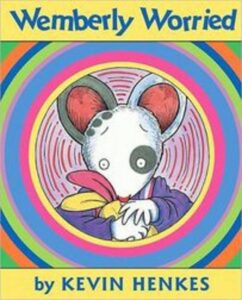
speech and language teaching concepts for Wemberly Worried in speech therapy​ ​
Frequent Speech Sounds:

/er/ medial and final
/w/ initial
/th/ medial

Themes:

non-seasonal
feelings/emotions
worrying

Book Details:
Diverse Characters: N/A
Age Recommendation: Early Childhood, Elementary

Wemberly Worried

By Kevin Henkes

Wemberly worried about everything. Big things. Little things. And things in between. Then it was time for school to start. And Wemberly worried even more. If you ever worry (or know someone who does), this is the book for you. Wemberly worried about spilling her juice, about shrinking in the bathtub, even about snakes in the radiator. She worried morning, noon, and night. “Worry, worry, worry,” her family said. “Too much worry.” And Wemberly worried about one thing most of all: her first day of school. But when it’s time to go back to school and she meets a fellow worrywart in her class, Wemberly realizes that school is too much fun to waste time worrying!

This thoughtful feelings and /r/-themed book can be used in speech therapy to target character analysis, and the social/emotional issue of worrying. It is also great for targeting sounds including /r/ vocalic, /w/ and /th/! Discover more of the speech and language teaching concepts for using Wemberly Worried in speech therapy below:

Key Teaching Concepts

Narrative Structure:

complete episode

Narrative Concepts:

theme/message​
character analysis
social/emotional​
text features​
phonological awareness​

Character Analysis:

Wemberly worries about everything. She is most worried about her first day of school. When her teacher introduces her to a new friend, Wemberly learns to enjoy the day and is “in the moment” allowing her to not worry so much about the “what if’s”.

Social/Emotional:

Do you find yourself worrying about things?
What do you do when you start to worry?
How can we learn to be in the moment?
How can our friends help us when we are worried or nervous about something?
How can writing things down, going through a plan, or thinking of possible outcomes help us?

Grammar:

adjectives
verbs (action)
verbs (regular past tense)

Text Features:

change in text size
change in font
moving text
dialogue
question marks

Phonological Awareness:

alliteration

Inferencing:

How does her family treat her when she worries?
What do you think about the things she is worried about?
Does it help when her parents tell her not to worry?
Why do you think her teacher wants her to meet Jewel?
How does she feel at the end of the day?
How will she feel tomorrow?

Predicting:

What could happen with each thing she is worrying about?
What do you think her parents could do to help her with her worries?
What do you think could be nerve wrecking about the first day of school?
What do you think will really happen on the first day of school?
What do you think she will do on the second day of school?
Do you think she will worry less? Why or why not?