
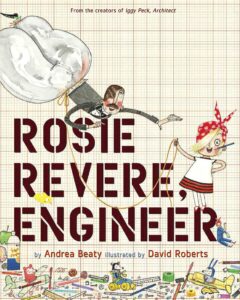
speech and language teaching concepts for Rosie Revere the Engineer in speech therapy​ ​
Frequent Speech Sounds:

/r/ initial
/ear/ final

Themes:

non-seasonal
miscellaneous
perseverance
STEM

Book Details:
Diverse Characters: Yes
Age Recommendation: Elementary, Late Elementary

Rosie Revere, Engineer

By Andrea Beaty

Rosie Revere dreamed of becoming a great engineer. Where some people see rubbish, Rosie sees inspiration. Alone in her room at night, shy Rosie constructs great inventions from odds and ends. Hot dog dispensers, helium pants, python-repelling cheese hats: Rosie’s gizmos would astound—if she ever let anyone see them. Afraid of failure, she hides them away under her bed. Until a fateful visit from her great-great-aunt Rose (AKA Rosie the Riveter!), who shows her that the first flop isn’t something to fear—it’s something to celebrate. And you can only truly fail, if you quit.

This great STEM picture book is perfect for targeting initial /r/ with its high frequency use of “Rosie” and “Rose”. It can also be used in speech therapy to address social/emotional concepts such as perseverance, persistence, and pursuing one’s passion. It is also great for targeting rich vocabulary, inferencing and character analysis. Discover more of the speech and language teaching concepts for using Rosie Revere, Engineer in speech therapy below:

Key Teaching Concepts

Narrative Structure:

complete episode

Narrative Concepts:

vocabulary
theme/message
character analysis
illustration study
inferencing
social/emotional
phonological awareness
complex sentence structure

Vocabulary:

engineer, treasure, stash, eaves, gadget, gizmo, inventions, chuckle, perplexed, dismayed, relation, daring, flop, sputter, baffled, success, failure

Character Analysis:

Rosie is self conscious about her inventions as she digs through the trash at school and after her uncle Fred laughs at her. She hides her inventions deep under her bed until one day her aunt reveals that she has dreamed of flying. Rovie sets out on a mission to make something that can help her fly and realizes how proud her aunt really is as Rosie keeps trying to make it just right.

Social/Emotional:

Rosie learns that people can laugh for a variety of different reasons including being amazed, shocked, and proud. She also learns to never give up even when things don’t go as planned and the importance of being yourself. 

Grammar:

complex sentence structure
verbs (regular past tense)
verbs (mental state)
adjectives

Text Features:

moving text
ellipses

Phonological Awareness:

rhyming

Inferencing:

Why did she not dare to speak in class?
Why did she wait until no one saw her to peek in the trash?
Why does she hide her gadgets far under her bed?
How did her aunts and uncles feel about her inventions?
How did Rosie feel when her inventions were laughed at?
Why did Rosie think Fred was not telling the truth?
Why does Rosie think she can’t make the gizmo that flies?
How did Rosie feel when the gizmo fell?
How does Rosie feel when it flops and her aunt laughs?
Why does Rosie think her aunt is laughing?
How did Rosie and her aunt feel at the end?

Predicting:

What do you think she will make with the trash?
What do you think Rosie will make for her aunt?
How do you think she will make her aunt fly?