speech and language teaching concepts for Pirate's Perfect Pet in speech therapy​
Frequent Speech Sounds:

/k/ initial “Captain Crave”
/kr/ initial or medial “Captain Crave” and “Crave” and “crew”
/r/ medial “pirate” and “parrot”
/p/ initial

Themes:

pirates
pet

Book Details:
Diverse Characters: Yes
Age Recommendation: Elementary, Late Elementary

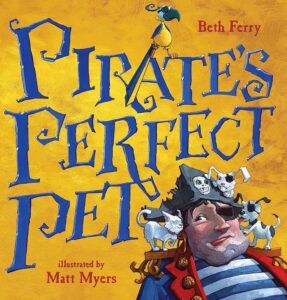
Pirate’s Perfect Pet

By Beth Ferry

Big, brave Captain Crave can check off most items on the handy Be Your Best Buccaneer checklist. He has a pirate ship, an eye patch, courage and daring, and more. Only one thing is missing: Captain Crave doesn’t have a pet. Arrr! Shuck me an oyster and set sail for land! The captain and his crew race and chase critters of every size and shape, from the beach to a farm to the zoo to a pet shop, causing a commotion wherever they go. But just when all seems lost, the search party stumbles on the most perfectly perfect pet for Captain Crave. Has he finally met his match? Aye-aye!

This hilarious pirate-themed book can be used in speech therapy to address grammar concepts, such as linguistic verbs and adjectives. It is also great for character analysis! Discover more of the speech and language teaching concepts for using Pirate’s Perfect Pet in speech therapy below: 

Key Teaching Concepts

Narrative Structure:

complete episode

Narrative Concepts:

problem solving
vocabulary
character analysis
sequencing
illustration study
inferencing
predicting
adjectives
verbs (linguistic)
text features
repetitive text

Sequencing:

order of places the crew searched for the Perfect Pirate Pet
order animals considered

Vocabulary:

bobbing, courageous, daring, commotion, checklist, anchored, enclosed, uproar

Character Analysis:

Captain Crave is courageous and daring. He meets all criteria for being the Perfect Pirate Captain with the exception of having a peg leg and a pet. He is determined to fulfill the checklist and sets out to find a perfect pet. On his way he also proudly obtains a peg leg.

Throughout the story you can infer more about his character as well as about pirates based on why certain animals will not be a perfect pirate pet.

Grammar:

adjectives
verbs (linguistic)
verbs (present progressive)
verbs (regular past tense)
homophones

Text Features:

ellipsis
text in illustrations
dialogue
exclamation points
italics
repetitive text
pirate talk

Inferencing:

Why do you think he wants the bottle?
How is the crew causing a commotion?
How is the crab being cranky?
Why is being nibbly/muddy/ stubborn/bossy not good for a pirate pet?
How do you think the zookeeper feels about driving the pirates?

Predicting:

Where do you think he will find a perfect pirate pet?
What do you think would be a good pet for him?
Where do you think they will look next?

Problem Solving:

Captain Crave uses a checklist to determine if he is a perfect pirate captain and discovers that he is missing two things. He needs a peg leg, but that is already on his to-do list. He did not expect that he also needed a pet, so he and his crew set out to find the perfect pirate pet. He and his crew check multiple places, but walk away empty handed until they finally stop at the Pet Emporium.

If you are interested in using Pirate’s Perfect Pet other pirate-themed books in speech therapy, then check out these print-&-go cheat sheets. Perfect for when you don’t need a full book companion. 

If you are interested in seeing other pirate-themed books to use in therapy, then check out the Themed Key Teaching Points Book List for a printable copy.