
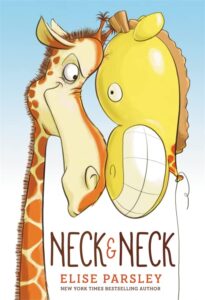
speech and language teaching concepts for Neck & Neck in speech therapy​ ​
Frequent Speech Sounds:

/l/ initial and medial (balloon)
/ld/ final

Themes:

zoo
feelings/emotions
non-seasonal

Book Details:
Diverse Characters: Yes
Age Recommendation: Elementary, Late Elementary

Neck & Neck

By Elise Paisley

Everybody loves Leopold the giraffe. He inspires awe and wonder. His adoring fans gaze and cheer. Best of all, they feed him lots of deeeelicious snacks! But, one day, a shiny, bobble-headed new rival comes in and ruins everything…a giraffe-shaped balloon! Just how far will Leopold go to prove that he’s the hero of the zoo?

This fun, snarky zoo and feelings book can be used in speech therapy to address character analysis including self-esteem and ego, inferencing and predicting. It is also great for targeting text features and /l/ sounds. Discover more of the speech and language teaching concepts for using Neck & Neck in speech therapy below:

Key Teaching Concepts

Narrative Structure:

complete episode

Narrative Concepts:

vocabulary
character analysis
inferencing
figurative language​
illustration study
predicting​
verbs (regular past tense)
adjectives
text features​

Vocabulary:

confrontation, self-esteem, snarky, brag, glorious, ​gasp, gleaming, flexible, glance, grin, undivided, ponder, drift, scrawny, adored, habitat, groan

Character Analysis:

Leopold enjoys his life at the zoo with cheers, laughs and snacks. When another “giraffe” comes into the picture, Leopold is threatened by his “invasion”. Leopold lets his ego get the best of him trying to compete for the boy’s attention and ultimately ends up hurting his feelings. In the end, Leopold notices how sad the boy is and decides to use his great characteristics to help the boy. By humbling himself, he earns the boy’s admiration.

Social/Emotional:

-notice the facial expressions and body language and infer the emotions.

Figurative Language:

idioms (neck and neck)

Grammar:

verbs (regular past tense)
adjectives

Text Features:

ellipses
capitals
enlarged text
exaggerated vowels

Inferencing:

How does Leopold feel about life at the zoo?
Why did Leopold gasp?
How does Leopold feel when he hears the boys remark? How do you know?
Why did Leopold put on a big grin?
What can you infer by his tone of voice (italicized “I”)?
How does the boy feel about his balloon?
What can you infer about the boy’s personality?
Why did Leopold need alone time?
How do you think he really feels?
How does the boy feel when his balloon is popped?
Why does Leopold think the boy will give him laughs, cheers and snacks now?
Why were Leopold’s mouth and eyes open so wide?
Why was the boy pointing and laughing?
Why does Leopold want the balloons to go away?
Why is Leopold pondering saving the balloons now?
What does Leopold think about the balloons?
Why did Leopold save them?
How do they feel about Leopold saving the balloons?
Why were the snacks at the end the best ones ever?

Predicting:

What do you think Leopold will do after he hears the boy?
What do you think Leopold will do to zoom and bounce?
What do you think the boy will say next about his balloon?
What do you think Leopold’s idea is when he gets pricked?
Where do you think he is going?
What do you think the boy will do next?
Do you think Leopold will save the balloons?

If you are interested in seeing other zoo and feelings books to use in therapy, then check out the Themed Key Teaching Points Book List for a printable copy.